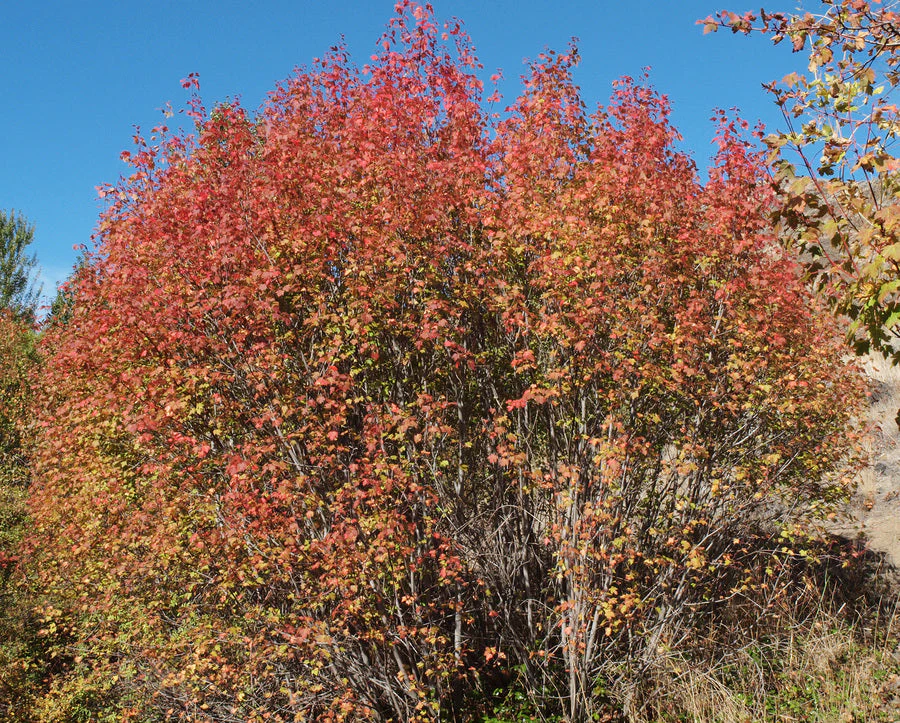

Maple - Mountain | 18-24"
400+: $2.49 each · 100-399: $2.89 each
Mountain Maple (Acer spicatum)
A hardy native understory maple with vibrant fall color, compact growth, and exceptional value for wildlife.
Mountain Maple is a small native tree or large shrub that thrives in cool, moist woodland environments. Unlike larger maples grown primarily for shade, Mountain Maple naturally forms a bushy, multi-stemmed shape that fits beautifully along woodland edges, beneath taller trees, and in naturalized landscapes. Its broad, shallowly lobed leaves turn brilliant shades of yellow, orange, and red in autumn, while its flowers and seeds provide seasonal interest and support local wildlife.
🌿 Key Features
🌎 Native North American Maple: Naturally grows across northeastern North America and the Great Lakes region.
🍁 Colorful Fall Foliage: Leaves turn attractive shades of yellow, orange, scarlet, and red in autumn.
🌳 Compact Growth Habit: Develops into a small tree or multi-stemmed shrub, making it suitable for understory plantings and smaller spaces.
🌲 Shade Tolerant: Grows well in partial to full shade, making it a useful choice beneath larger trees.
🌼 Distinctive Flower Clusters: Produces upright clusters of small greenish-yellow flowers in late spring to early summer.
🌱 Wildlife Food Source: Twigs and foliage are browsed by deer, moose, rabbits, and other mammals; buds are also eaten by grouse.
🍃 Textured Foliage: Broad leaves with three to five shallow lobes and coarsely toothed edges provide an attractive woodland appearance.
❄️ Cold Hardy: Well adapted to cold northern climates and naturally found in cool forests and mountain habitats.
🌱 Growing Information
Mature Height: 10–25 feet, occasionally taller
Mature Spread: 10–20 feet; may form wider thickets over time
Sunlight: Partial shade to full shade; tolerates full sun in cool, moist conditions
Soil: Moist, rich, well-drained soil; tolerates rocky and acidic soils
Moisture: Moderate to high; prefers consistently moist conditions
Growth Rate: Slow to moderate
Hardiness: USDA Zones 2–6
Pollination: Male and female flowers may occur on the same or separate plants; pollination occurs primarily by insects and wind
Seed Production: Produces paired winged seeds that mature in late summer to early fall
Best Uses: Woodland edges, understory plantings, native gardens, wildlife habitat, streamside landscapes, and naturalized areas.
🌳 Why Choose Mountain Maple?
Mountain Maple is an excellent choice for adding native vegetation to shaded or partially shaded areas where larger trees may be unsuitable. Its compact stature, brilliant autumn color, and ability to grow in cool, moist locations make it valuable for woodland restoration and naturalized landscapes. It also provides important browse for deer and other wildlife, helping support the natural food web while adding seasonal beauty.
Planting Note: Choose a cool location with moist soil and protection from prolonged heat or drought. Mountain Maple can spread into dense clumps, especially where stems are repeatedly browsed or damaged, so allow room for its natural growth habit.
